- home
- How to Choose the Right Carrier Oils for Your Skincare Formulations
How to Choose the Right Carrier Oils for Your Skincare Formulations
Formulation & Ingredients Series – by Mango & Emerald StudioLab
🌿 Introduction: The Heart of Every Formula
Every skincare product begins with a story — and for most, that story starts with a carrier oil.
Carrier oils are the foundation of your formulation. They set the tone for how a product feels, performs, and nourishes the skin.
Whether you’re creating a facial serum, a body oil, or a treatment balm, choosing the right carrier oils can transform your formulation from simple to luxurious.
At Mango & Emerald, we help estheticians and indie skincare founders master the art of formulation — blending creativity with strategy. In this guide, you’ll learn how to confidently choose carrier oils that suit your product, your customer, and your brand.
What Are Carrier Oils (and Why They Matter)
Carrier oils are plant-derived oils used as the base or “vehicle” in skincare formulations.
They do far more than dilute essential oils — they nourish, protect, and deliver actives deep into the skin.
Their role includes:
- Supporting the skin barrier and moisture balance
- Determining absorption rate and texture
- Extending the life of your formula
- Influencing sensory feel (dry, silky, dewy, rich)
💡 StudioLab Insight: The oils you choose shape your brand’s texture identity — that “feel” your customers remember.🌸 Types of Carrier Oils and When to Use Them
Lightweight Oils
Perfect for oily or combination skin types and fast-absorbing formulas.
Examples: Squalane, Jojoba, Grapeseed, Meadowfoam Seed
✨ Use for: Facial oils, serums, and day creams where you want a clean finish.
Medium-Weight Oils
Balanced texture and moderate absorption — the multitaskers of formulation.
Examples: Sweet Almond, Apricot Kernel, Prickly Pear Seed, Camellia Seed
✨ Use for: Versatile blends and everyday moisturizers.
Rich & Deeply Nourishing Oils
Best for dry, mature, or sensitive skin. These oils provide intense moisture and protection.
Examples: Tamanu, Avocado, Pomegranate, Pumpkin Seed
✨ Use for: Night oils, balms, and restorative treatments.
Looking for oils specifically for dryness? Start with Best Oils for Dry Skin.
Choosing Oils Based on Skin Type
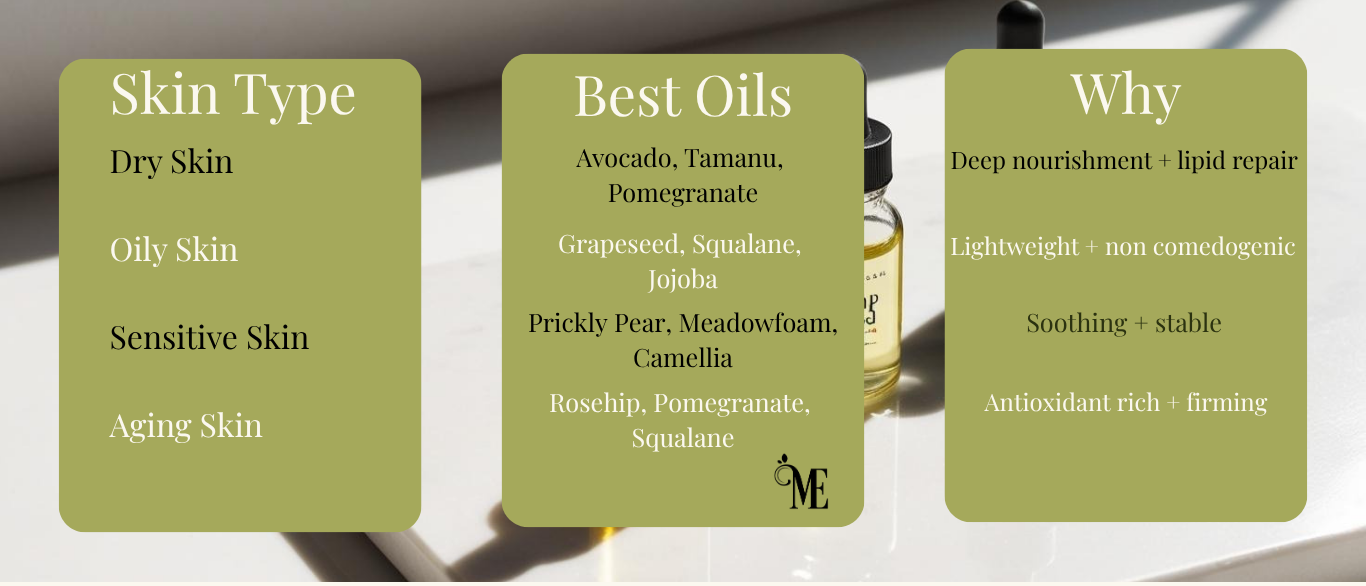
✨ Balance is key — every blend should feel harmonious, not heavy.
Key Factors to Consider When Choosing Oils
Want more ingredient breakdowns like this? Visit the Ingredient Library.
💎 The Formulator’s Framework for Blending Oils
When creating your blend, think in layers — each oil serves a purpose.
1. Base Oil (70–80%) – Provides stability and texture
Examples: Jojoba, Meadowfoam, Squalane
2. Support Oil (15–25%) – Targets specific skin concerns
Examples: Tamanu for acne-prone skin, Pomegranate for firming
3. Booster Oil (5–10%) – Adds luxury and performance
Examples: Rosehip for glow, Blue Tansy for calmness
🧴 Sample “Radiance Face Oil” Formula:
- 70% Jojoba Oil
- 20% Prickly Pear Seed Oil
- 8% Rosehip Oil
- 2% Vitamin E
Balanced, brightening, and stable — perfect for glowing skin.
⚗️ Things to Consider When Choosing Oils
- Absorption Rate – Impacts product texture and use time.
- Comedogenic Rating – Especially important for facial oils.
- Shelf Life – Stable oils last longer and require fewer antioxidants.
- Sensory Profile – Each oil’s texture defines your product’s identity.
- Cost & Scalability – Choose oils you can source sustainably as you grow.
💡 Pro Tip: Pair long-shelf-life oils like Meadowfoam with shorter ones like Rosehip for stability and luxury.
Common Mistakes to Avoid
🌺 Final Thoughts: Craft With Intention
Choosing the right carrier oils is about understanding your skin goals, your formulation purpose, and your customer’s experience.
When you treat your oils like ingredients with purpose — not just “fillers” — your products feel intentional, elevated, and professional.
At Mango & Emerald, we believe in blending creativity with clarity — because beauty should be both art and science.
Ready to Start Formulating?
If you’re ready to start experimenting with your own blends, don’t go it alone.
Join the Mango & Emerald StudioLab — our free community for estheticians and beauty founders learning how to create skincare safely and beautifully.
Inside, you’ll get:
🌿 Free formulation templates
💛 Ingredient guides and worksheets
✨ Early access to new courses and resources
Want a ready-made barrier support option? Try the Plain Jane Barrier Repair Body Butter.